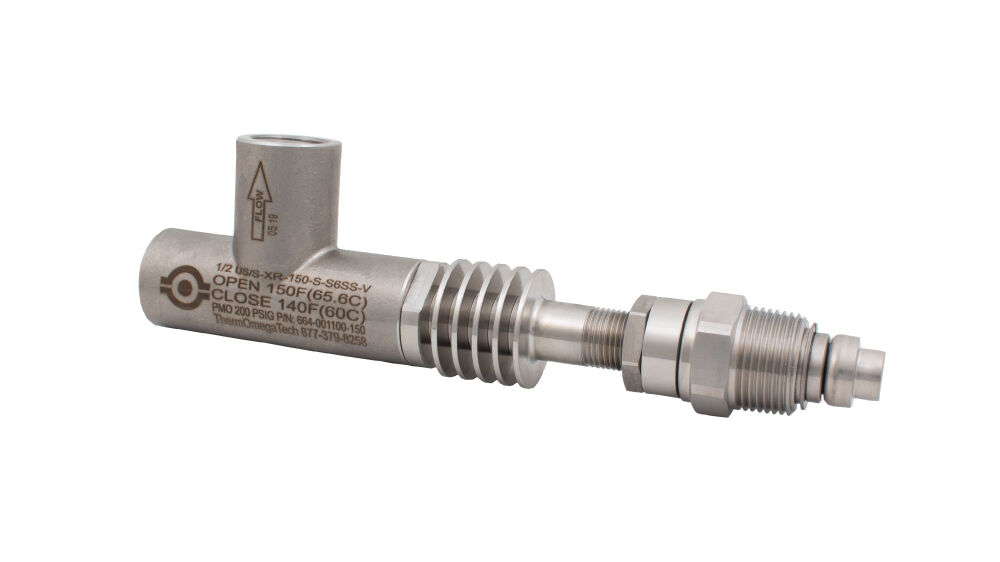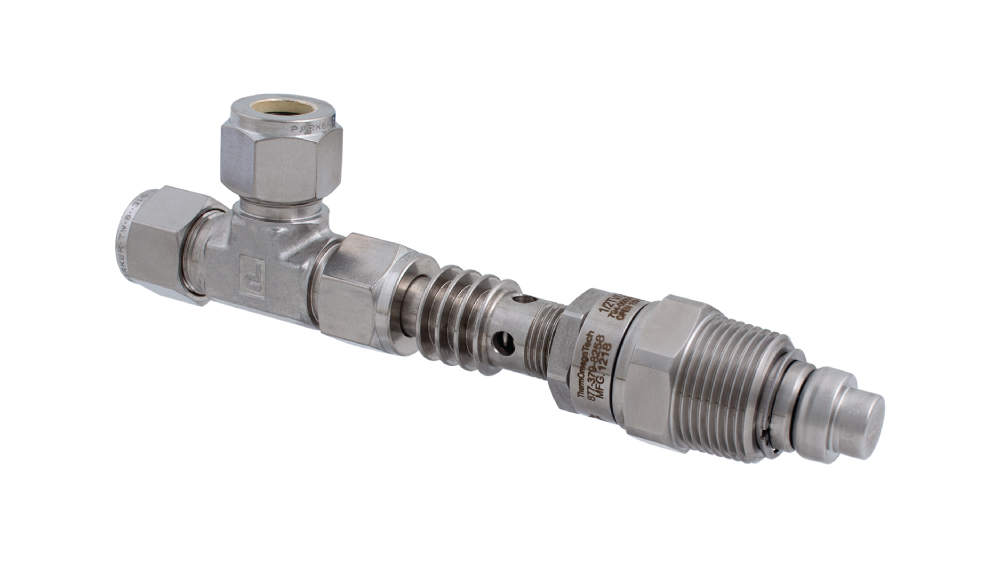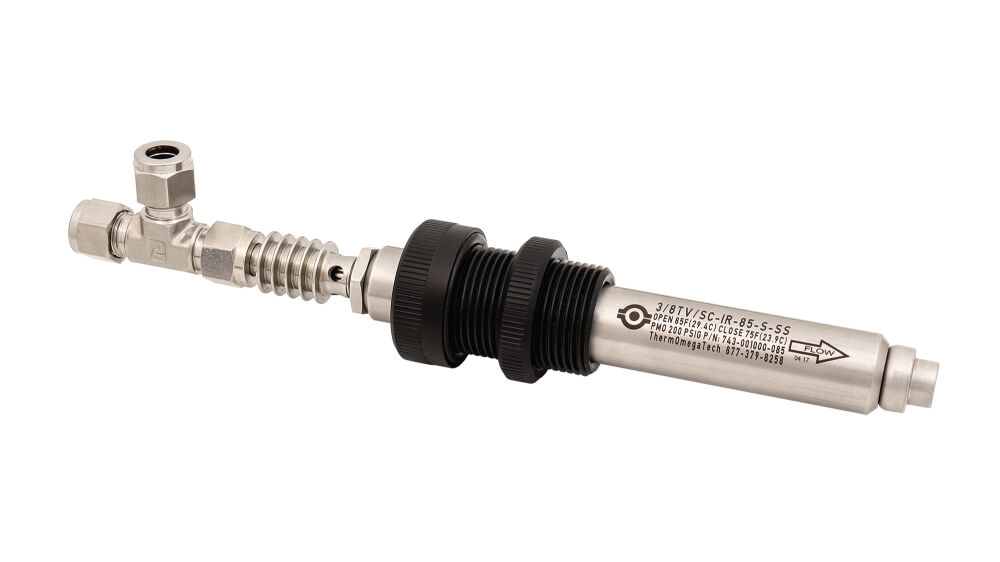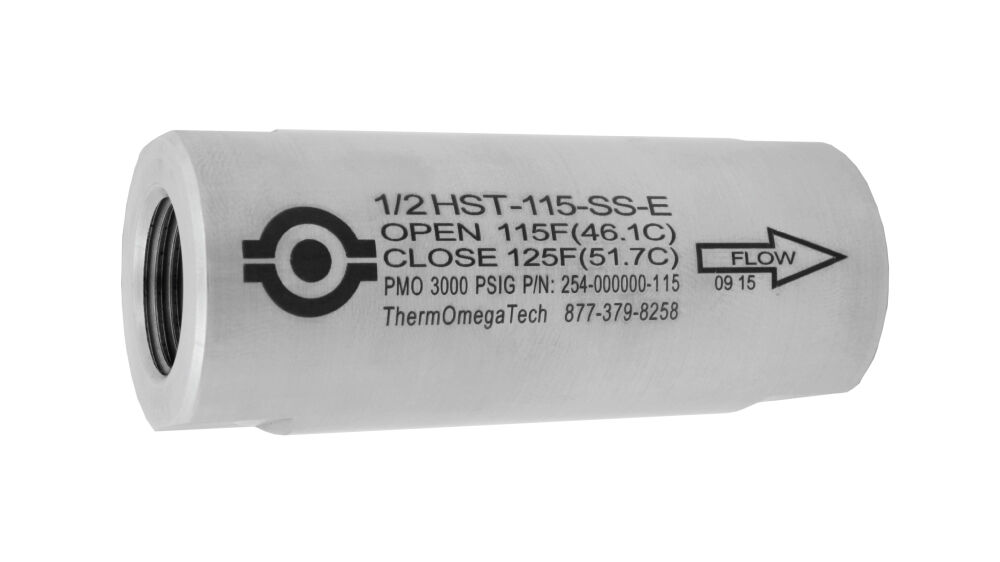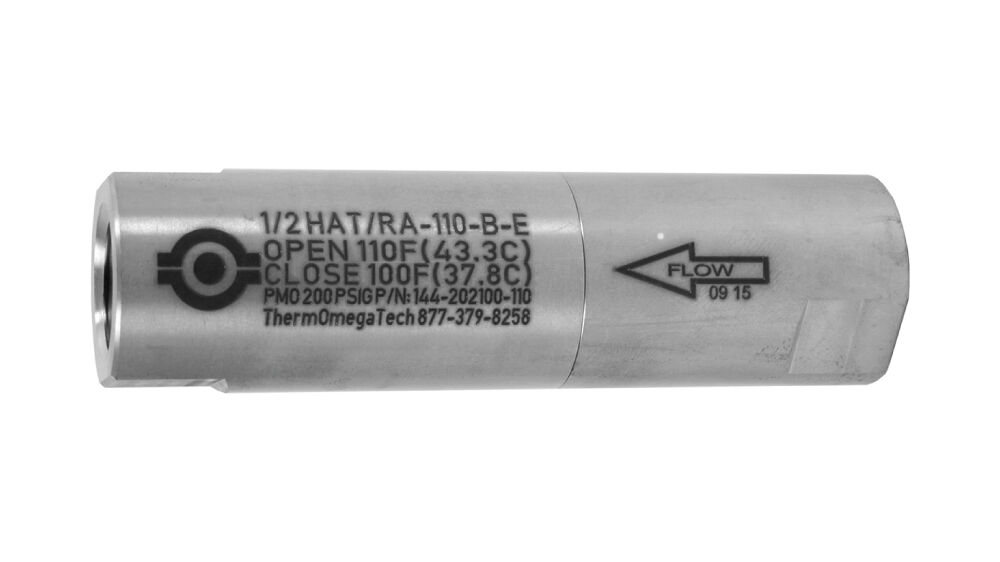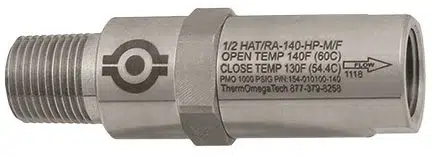

High-Pressure Thermal Relief for Pump Protection
The HAT/RA-HP maintains a relatively constant discharge temperature, even as system pressure varies. By regulating the amount of fluid discharged according to cooling demand, the valve minimizes unnecessary water consumption.
Its compact design allows for quick and easy installation in high-pressure pump and cooling applications.
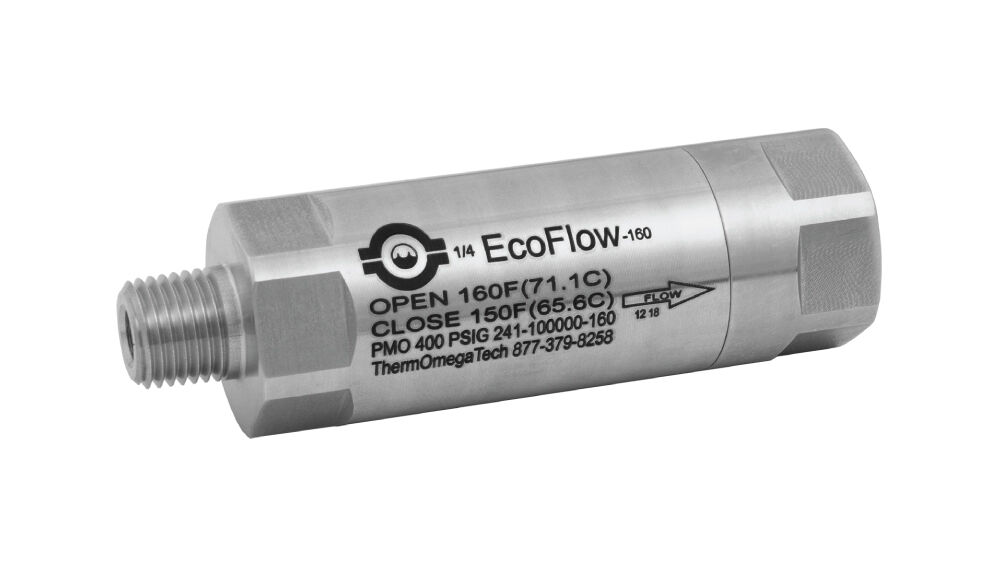
For lower-pressure pump applications, consider the ECONO/HAT-RA Pump Thermal Relief Valve.
Design Features
- Exclusive Thermoloid® paraffin wax thermal actuator
- Compact, low mass for fast response
- Corrosion resistant –long service life
- Ram-type plug for reliable shut-off
- Operates in a narrow temperature band
- Discharges minimum amount of water to keep water temperature at safe limits
Typical Applications
Beyond fire pump and high-pressure water pump protection, the HAT/RA-HP can regulate the flow of water, glycol, or other compatible cooling media to remove excess heat from equipment and industrial processes.
Technical Documents
Specifications
- Size: ½”
- Maximum Operating Pressure: 1000 PSIG (69 bar)
- Maximum Temperature: Range 150ºF (83.3ºC) over set point with a limit of 250°F (121°C)
Ordering
| Part Number | Description |
|---|---|
| 154 – 010X00 – XXX | 1/2” HAT/RA-HP-M/F |
Ordering & Configuration Notes
- Full open temperatures “XXX” available: 040°F, 050°F, 060°F, 070°F, 075°F, 085°F, 090°F, 095°F, 100°F, 105°F, 110°F, 115°F, 120°F, 125°F, 130°F, 140°F, 150°F, 160°F, 170°F, 175°F, 180°F, 190°F, 200°F, and 210°F.
- Closing temperature is typically 10°F below the opening temperature.
- Replace singular “X” with 1 for EPDM body seals; 2 for Viton body seals.
- Seal material compatibility:
- EPDM – air, water, steam, ketones, and synthetic hydraulic oils
- Viton – air, fuel, oil, gas, and petroleum-based hydraulic oils
Certifications
How the HAT/RA-HP Valve Works
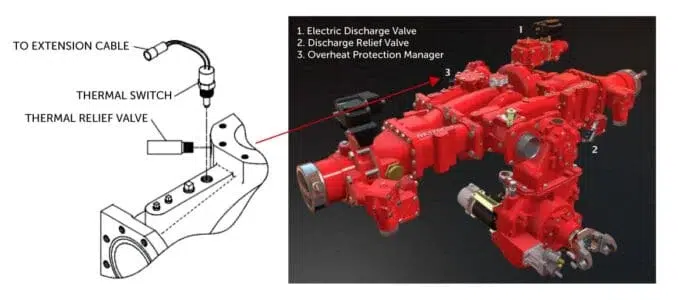
Installed on the pump, the HAT/RA-HP uses a self-actuating thermal actuator to respond to fluid temperature without requiring external power or controls.
As fluid temperature rises to the valve’s operating range, the actuator will modulate the valve open to discharge the over-temperature fluid. As temperature falls, the valve modulates toward its closed position, reducing discharge flow. This modulating action maintains a relatively constant fluid temperature and reduces wasted water and energy.