
Industrial
Lube Oil Systems
Self-actuating thermostatic valves regulate lube oil temperature to maintain lubrication and protect bearings, seals, and rotating equipment.
View ProductsWhy Lube Oil Temperature Matters
Lube oil performs two critical functions: lubricating moving surfaces and carrying heat away from bearings, gears, seals, and other components. Lube oil temperature control helps keep viscosity within the range required to maintain an effective lubricating film and reliable equipment operation.
As oil temperature rises, viscosity decreases. When temperatures exceed recommended limits, the lubricating film can weaken, increasing wear and accelerating oil and component degradation. Cold oil presents a different challenge. Higher viscosity can restrict circulation and place additional load on pumps during start-up.
Keeping oil within the required range supports effective lubrication and equipment reliability while reducing temperature-related wear, maintenance, and unplanned downtime.
Oil Below Recommended Range
- Higher fluid viscosity
- Increased resistance to circulation
- Higher pressure drop
- Slower oil delivery during start-up
Oil Above Recommended Range
- Lower viscosity
- Reduced lubricating film
- Increased component wear
- Accelerated oil degradation and varnish formation
- Bearing and seal deterioration
Controlling Oil Flow Through the Cooling Circuit
ThermOmegaTech® thermostatic control valves respond directly to oil temperature and automatically regulate cooling flow without external power, sensors, or electronics.
Depending on the equipment and piping arrangement, oil can be mixed to regulate supply temperature, diverted between cooler and bypass paths, or managed through a bypass valve with integrated pressure relief to protect the cooler and system from excessive pressure.
Automatic operation allows the cooling circuit to respond as equipment load and heat generation change, keeping oil within the range required for effective lubrication.
Mixing for Supply Temperature
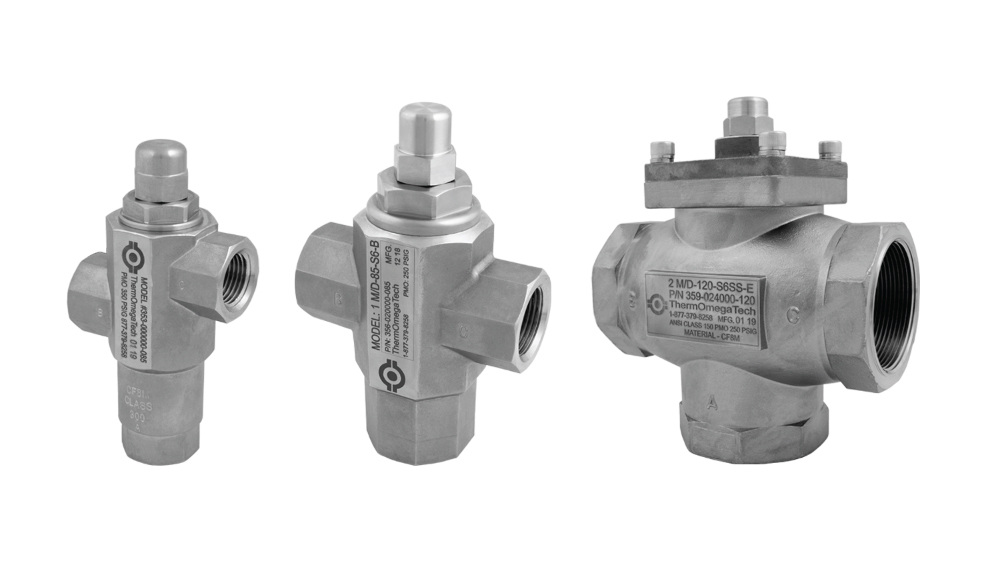
A 3-way thermostatic mixing valve blends oil streams at different temperatures to deliver the required supply temperature for bearings, manifolds, or other lubricated components.
Diverting for Oil Cooler Control
A 3-way diverting oil cooler bypass valve directs oil between the cooler and bypass path based on temperature, supporting warm-up and cooling as conditions change.
Bypass with Pressure Relief
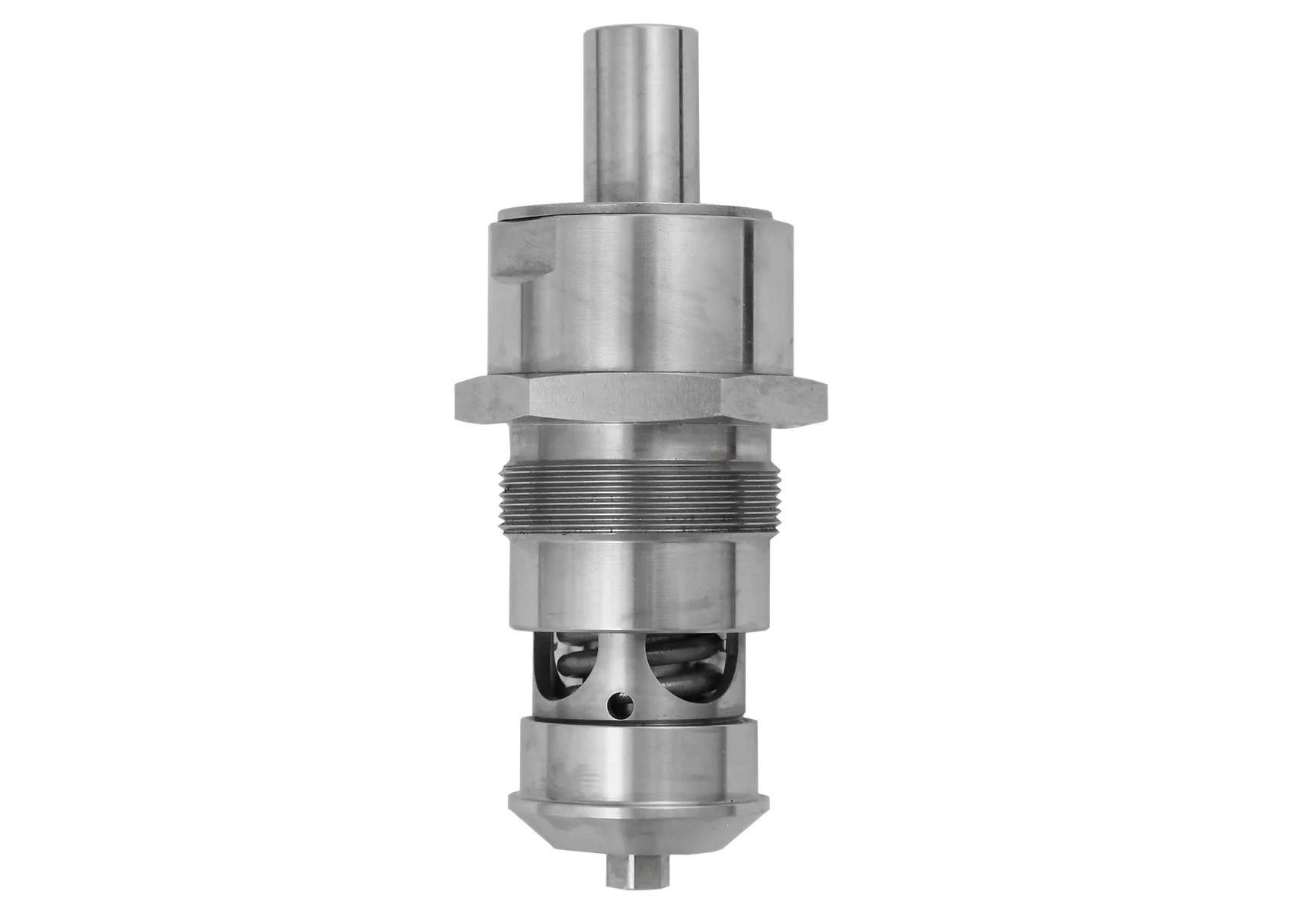
Some oil cooling circuits require protection from excessive pressure across the cooler or heat exchanger. The TBV-PR thermostatic bypass valve combines thermal bypass and pressure-relief functions in one valve.
Explore Thermal BypassWhere Lube Oil Temperature Control Is Used
Self-actuating temperature control valves can be incorporated into industrial lubrication systems including:
- Engines – Oil temperature control for circulating lubrication systems
- Compressors – Cooling under changing or continuous thermal loads
- Gearboxes and gear drives – Oil temperature management for gears, bearings, and other lubricated components
- Pumps and rotating equipment – Lubrication circuits supporting bearings, seals, and other moving components
- Lube oil skids and centralized systems – Oil circulation and cooling for one or more pieces of equipment
Related Products
Need Help Managing Lube Oil Temperature?
For standard valve selection, availability, and ordering, contact a ThermOmegaTech® Industrial Distributor.
For OEM or application-specific systems, ThermOmegaTech® can review your oil type, operating range, flow, pressure, and cooling circuit to help determine the appropriate mixing, diverting, or bypass solution.