Fluid Temperature Control
Fluid systems often need to reach their required operating range quickly before cooling is needed.
A thermal bypass valve prevents unnecessary cooling during warm-up by routing fluid around the cooler or heat exchanger. As the fluid warms, the valve progressively directs flow through the cooling path to remove excess heat and maintain the required operating range.
ThermOmegaTech® thermostatic bypass valves provide this control mechanically, without external power, sensors, or electronic controls.
How Thermal Bypass Works
ThermOmegaTech® thermal bypass valves use a paraffin wax thermal actuator that responds directly to fluid temperature.
During start-up, fluid below the valve set point is directed through the bypass path, allowing the system to warm more quickly without sending cold fluid through the cooler.
As the fluid warms, the actuator moves the valve to progressively increase flow through the cooler or heat exchanger. The valve continues to modulate between the cooling and bypass paths as conditions change, maintaining the required operating range automatically.
Common Applications
Self-actuating bypass valves are used in fluid systems that require automatic control of cooling as system demand changes.
- Hydraulic systems – HPUs, hydrostatic drives, mobile equipment, and hydraulic oil cooling circuits.
- Lube oil systems – Oil cooler bypass for engines, compressors, gearboxes, bearings, and lubrication systems.
- Engine and compressor cooling – Oil, coolant, and other circulation circuits.
- Industrial cooling systems – Heat exchanger bypass and closed-loop cooling systems.
Valve Configurations
Valve selection depends on the required flow path and whether pressure relief is needed.
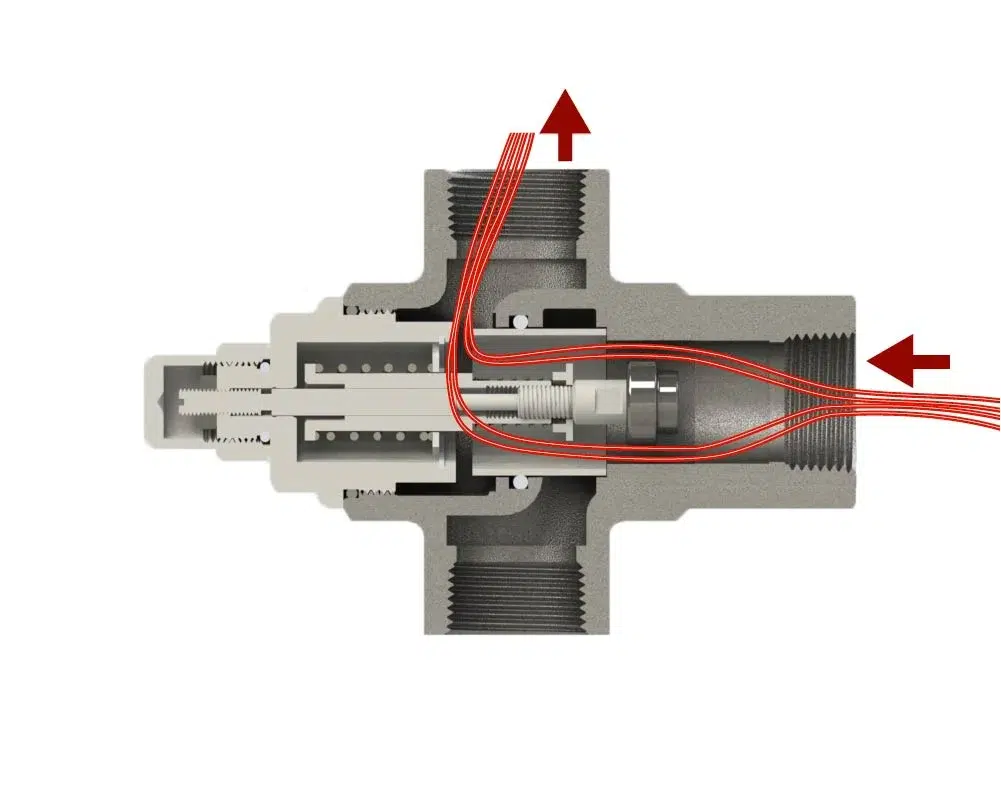
3-Way Valve
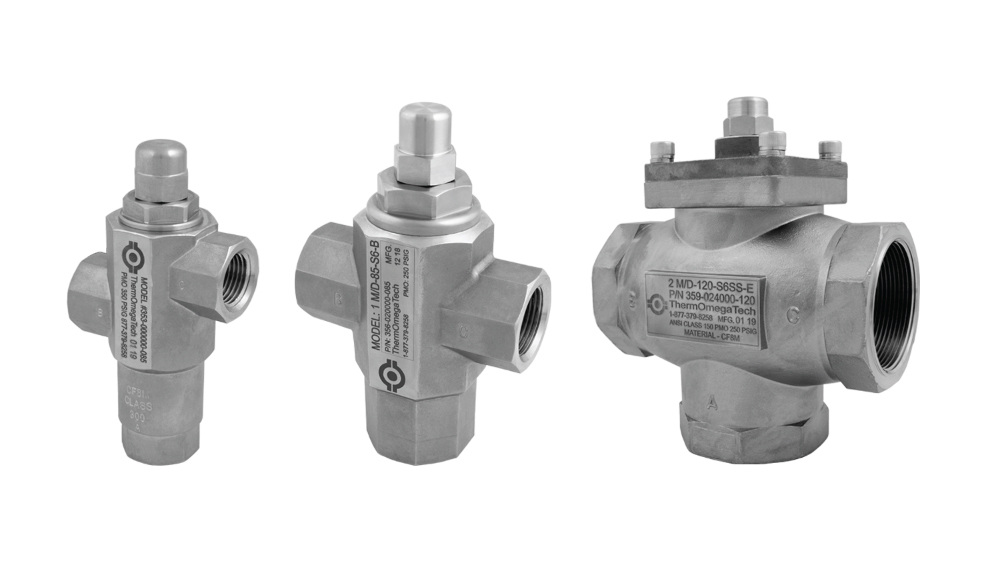
M/D Thermostatic Mixing and Diverting Valves direct flow between cooler and bypass paths based on fluid temperature.
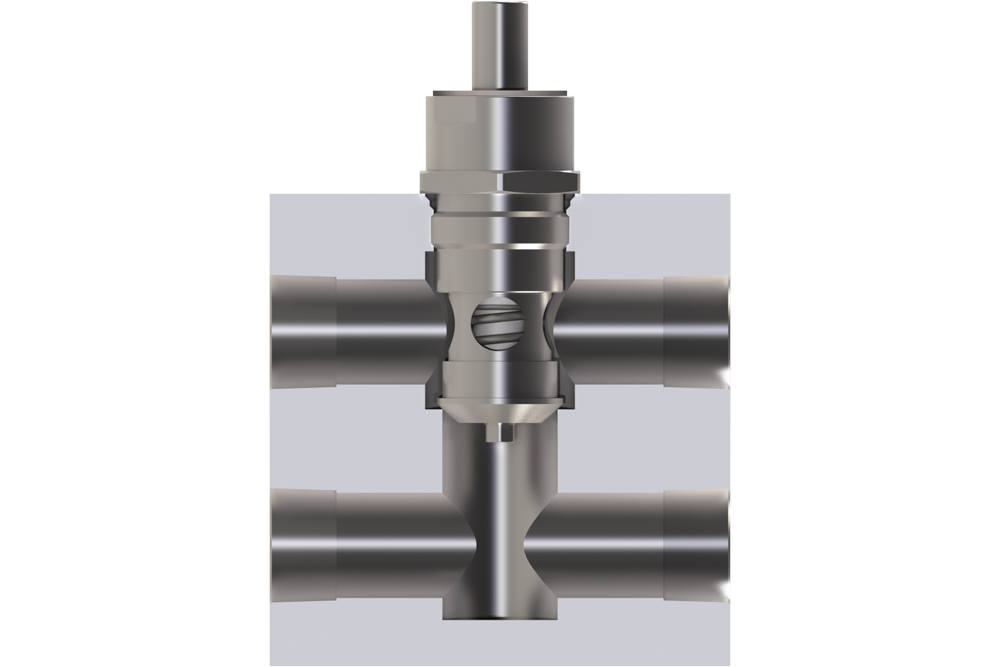
Valve with Integrated Pressure Relief
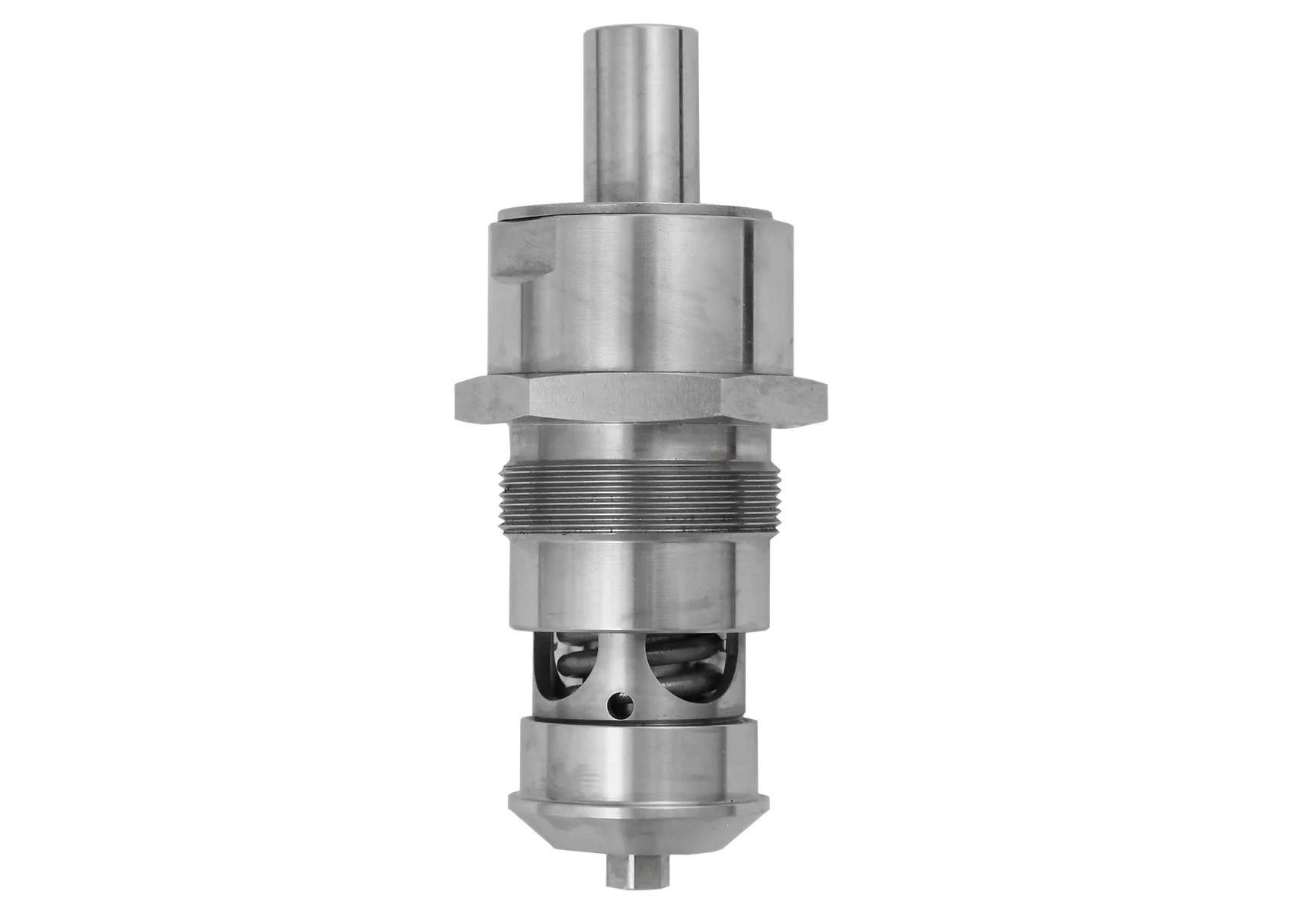
The TBV-PR combines thermostatic bypass control with integrated pressure relief and can be incorporated into a 4-way manifold configuration.
Aerospace & Defense Applications
ThermOmegaTech® self-actuating bypass technology is also used in Aerospace & Defense systems that require passive fluid temperature control.
Avionics & Electronics Cooling
Thermostatic valves direct coolant through or around heat exchangers as cooling demand changes in liquid-cooled avionics, electronics, radar, and related thermal management systems.
Explore Avionics & Electronics CoolingFuel & Oil Thermal Management
Thermostatic mixing and diverting valves regulate fuel, oil, hydraulic fluid, and coolant flow in aircraft, military vehicles, and other defense systems.
Explore Fuel & Oil Thermal Management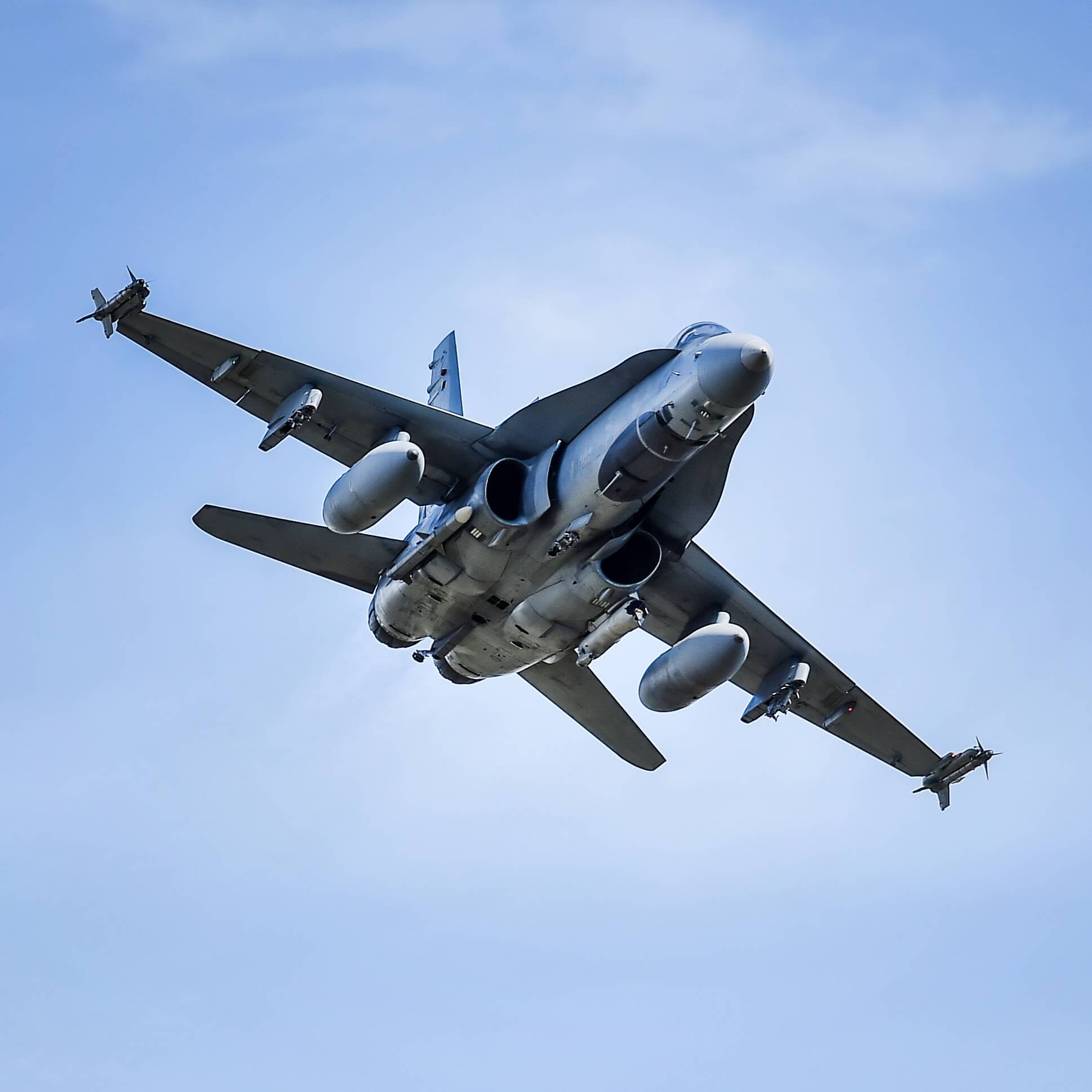
System Requirements
Selecting the Right Solution
The appropriate thermal bypass solution depends on the fluid, operating conditions, and layout of the complete circuit. ThermOmegaTech® offers standard valves as well as application-specific solutions for industrial, OEM, Aerospace & Defense systems.
Fluid & Temperature
- Fluid or media
- Temperature set point
- Valve and seal material compatibility
Flow & Pressure
- Flow rate
- System pressure
- Pressure-relief requirements
System Configuration
- Cooler or heat exchanger configuration
- Flow path and manifold configuration
Connections & Integration
- Connection requirements
- Manifold integration
Related Products
Need Help with Your Application?
For standard industrial applications, contact a ThermOmegaTech® Industrial Distributor for product selection, availability, and ordering support.
For OEM, Aerospace & Defense, or other application-specific requirements, contact ThermOmegaTech® to discuss your operating conditions and system requirements.