
Cold Water Recirculation & Balancing
Stagnant, warm water in a plumbing system increases the risk of Legionella bacteria growth. In domestic cold water systems, water that remains in branches and risers during periods of low or intermittent use can absorb heat from the surrounding environment.
Cold water recirculation keeps water moving through the distribution system, helping limit temperature increases and support distribution of disinfectant residual as part of a broader building water management strategy.
For applicable VA facilities, Veterans Health Administration (VHA) Directive 1061(4) requires cold water throughout the distribution system to be maintained at or below 67°F (19.4°C) to the greatest extent practicable to inhibit Legionella growth. The directive identifies piping insulation, automatic drain devices, and recirculation as methods that can limit increased temperatures within the cold water distribution system.
Adding recirculation alone does not ensure that flow is distributed evenly throughout the piping network. Differences in pipe length, pressure drop, system configuration, and operating conditions can cause some branches or risers to receive more flow than others. Proper balancing is required to maintain adequate circulation across all branches and risers.
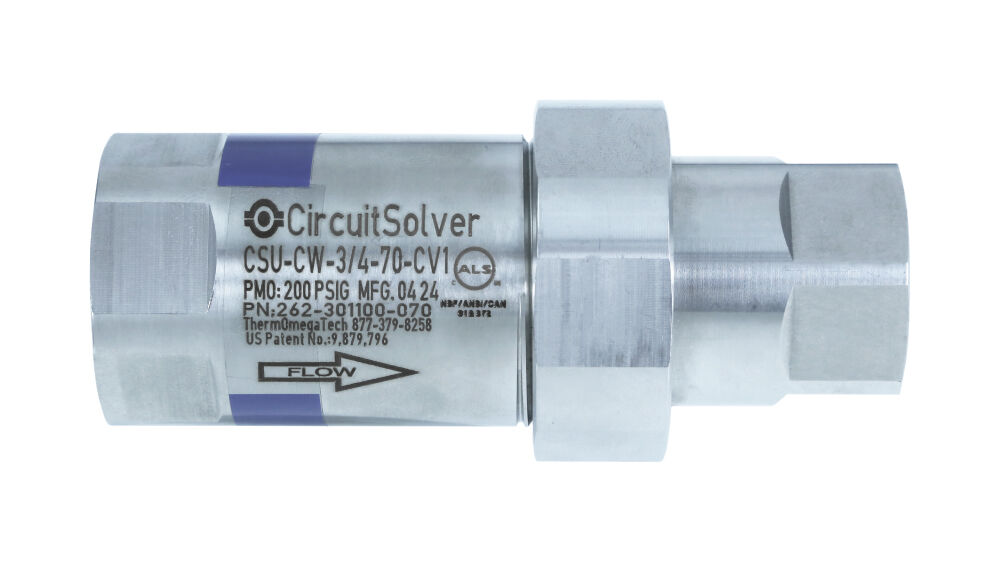
ThermOmegaTech® CircuitSolver® Union Cold Water (CSU-CW) thermostatic balancing valves automatically regulate recirculation flow based on water temperature to help maintain balanced conditions throughout the system.
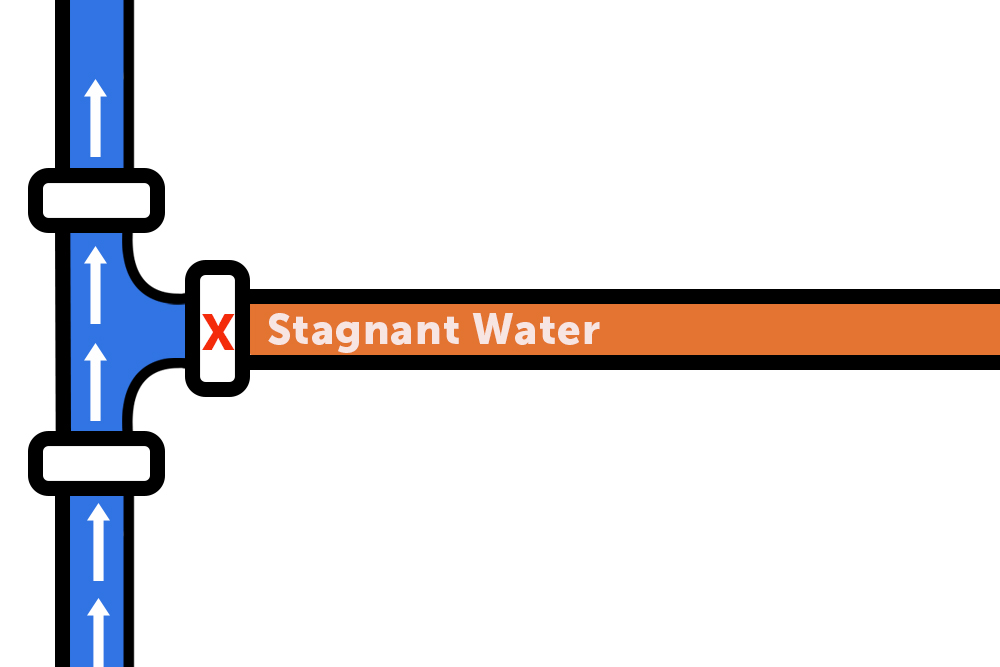
Before
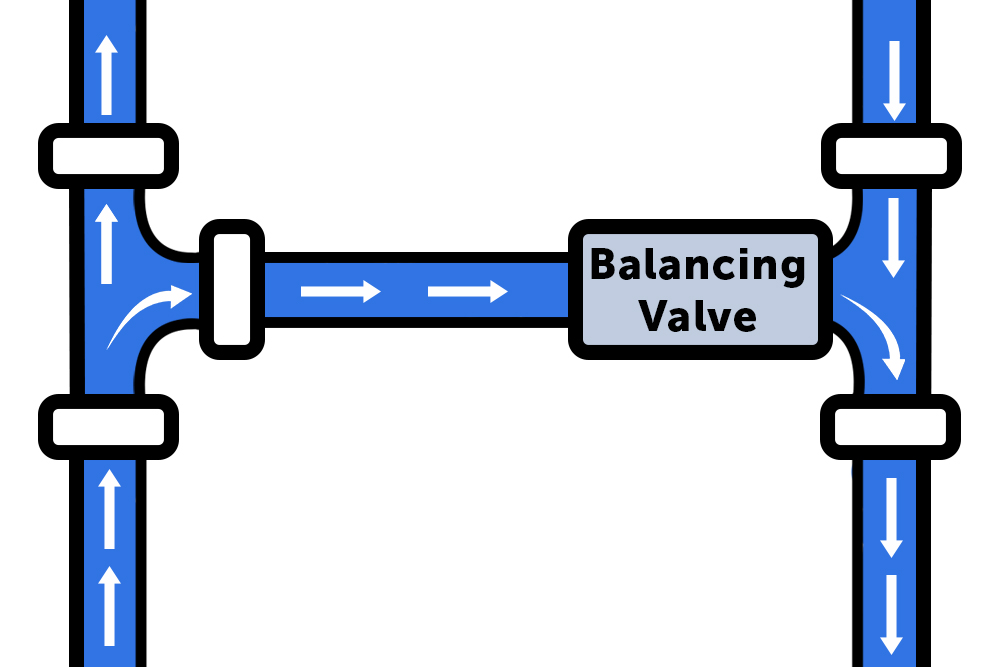
After
How Thermostatic Cold Water Balancing Works
CircuitSolver® Union Cold Water balancing valves are installed at the end of each cold water supply branch or riser before the common return line. Each valve continuously responds to local water temperature.
When the water is below the valve’s set point, the valve remains in its minimum-flow position, maintaining a small bypass. As the temperature rises above the set point, the valve opens to increase recirculation flow through that branch or riser.
As the water cools, the valve returns toward its minimum-flow position. Because every valve operates independently, circulation is continuously adjusted based on local conditions.
Dynamic Balancing as System Conditions Change
Domestic water systems do not always operate under the same conditions used to establish the original design flow. Occupancy changes, floor closures, building expansions, changes in fixture use, and differences between designed and installed piping can affect recirculation requirements over time.
Traditional manual balancing valves are set during system commissioning and do not automatically respond as system conditions change. CircuitSolver® balances based on actual water temperature, allowing the system to adapt without repeated testing and manual valve adjustment.
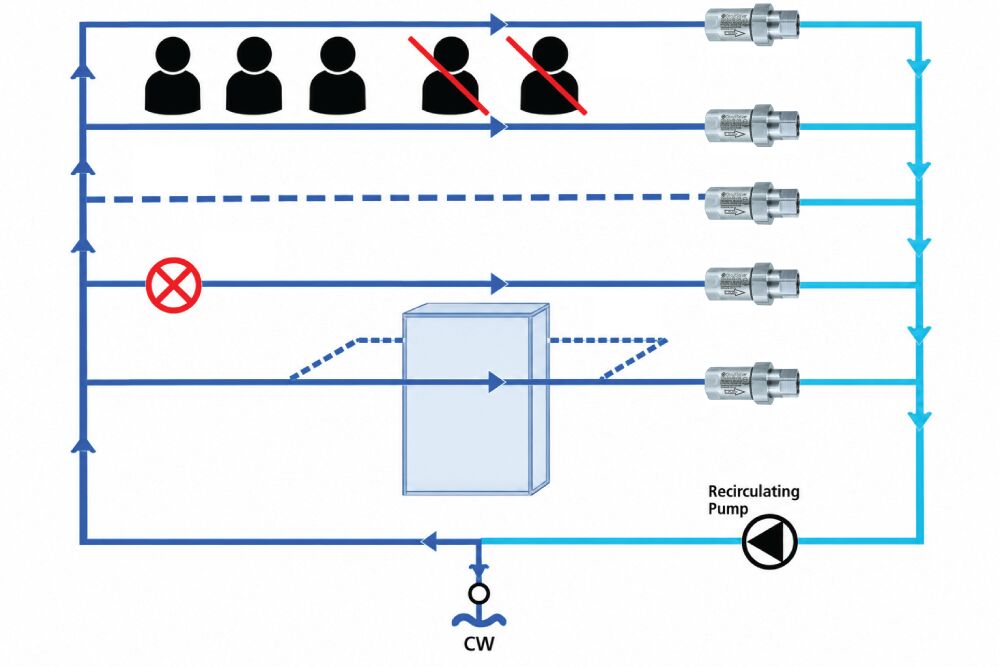
Where Cold Water Balancing Is Used
Cold water recirculation and balancing may be used in:
- Healthcare facilities
- Long-term care and residential care facilities
- Hotels and other lodging facilities
- Large commercial and institutional buildings
Benefits of Thermostatic Cold Water Balancing
- Supports Legionella mitigation by helping limit elevated cold water temperatures and stagnation
- Balances flow in response to temperature changes
- Responds automatically as occupancy and system demand change
- Eliminates manual balancing and repeated valve adjustment
- Requires no external power, sensors, or electronic controls
CircuitSolver® Union Cold Water is NSF/ANSI/CAN 61 and 372 certified for potable water applications and backed by ThermOmegaTech’s 10-year warranty.
Related Products
| Product Title | Industry | |
|---|---|---|
|
CircuitSolver® Cold Water Balancing Valve | Commercial Plumbing |
Specify Cold Water Balancing for Your System
Connect with a local ThermOmegaTech® representative for product selection, pricing, and project support.
Have a technical question about cold water recirculation or system requirements? Contact ThermOmegaTech® to discuss your application with our product experts.