
Balancing Domestic Hot Water Recirculation Systems
Commercial domestic hot water recirculation systems often include multiple branches or risers supplying fixtures throughout a building. Because water follows the path of least resistance, some branches can receive more flow than others, resulting in inconsistent hot water availability and longer wait times at fixtures.
Traditional manual balancing valves are adjusted during system startup to establish required flow rates, often requiring repeated testing and adjustment. Hot water demand also changes throughout the day, so a system balanced under static conditions may not remain balanced during actual operation. The result can be delayed hot water delivery, excessive recirculation flow, increased balancing labor, occupant complaints, and callbacks.
Domestic hot water balancing is ultimately a temperature problem. Maintaining a fixed flow rate does not account for changing demand or heat loss throughout the system.
ThermOmegaTech® developed CircuitSolver®, the first thermostatic balancing valve for domestic hot water systems, to regulate recirculation flow based on temperature rather than a manually established flow rate. Each valve responds independently to water temperature at its branch or riser, providing temperature-based control throughout the system.
How Thermostatic Balancing Works
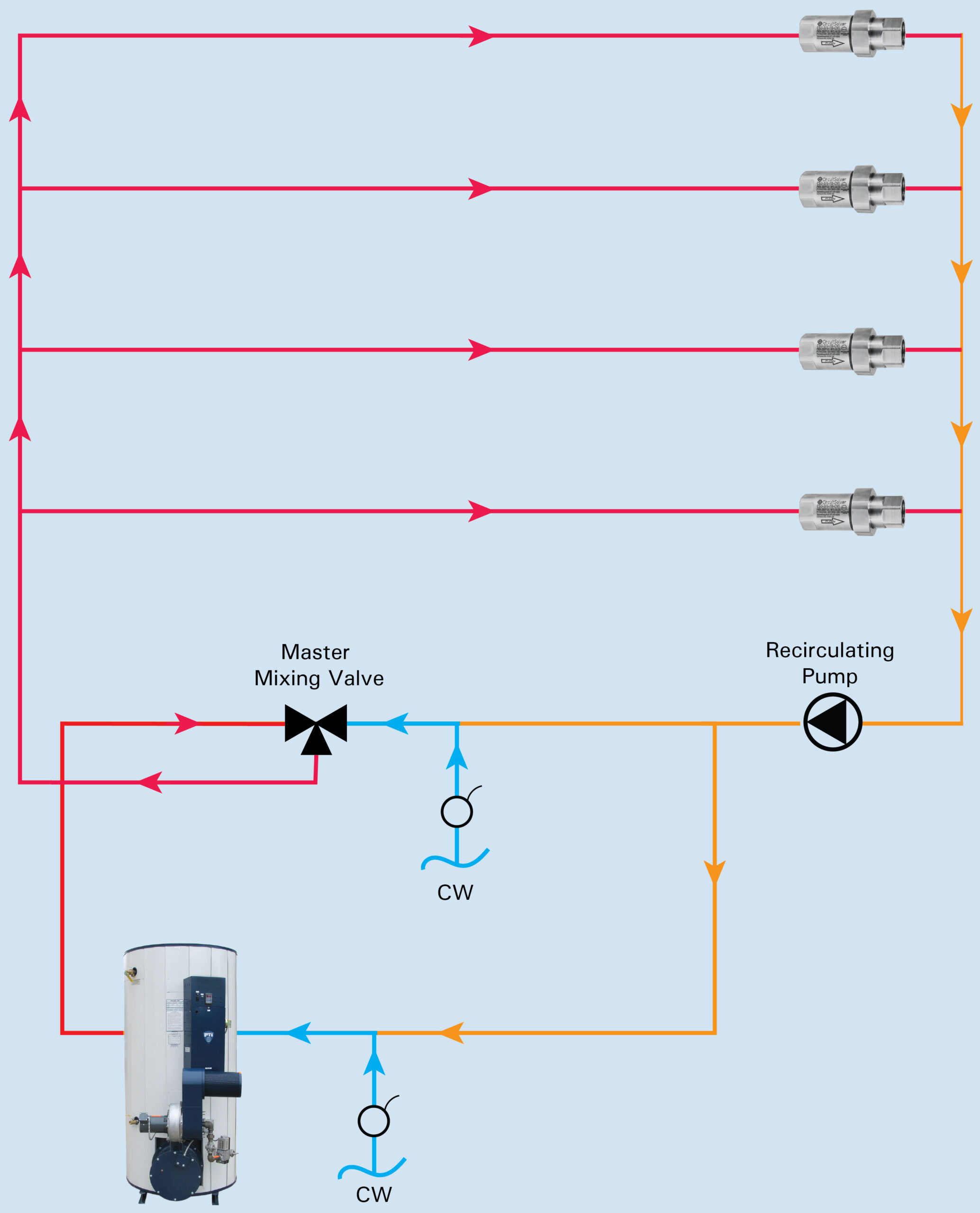
CircuitSolver® is installed at the end of each hot water supply branch or riser before the common return line. The valve responds directly to water temperature, automatically adjusting recirculation flow as conditions change.
When water temperature is below the valve’s set point, CircuitSolver® is open to allow flow through the branch. As the water approaches the set point, the valve modulates toward its closed position while maintaining a small bypass flow to prevent dead-heading the recirculation pump.
During system startup, all CircuitSolver® valves are open. As individual branches reach the set temperature, their valves restrict flow, making additional flow available to branches still in need of hot water. This continues until the system reaches thermal balance, allowing initial system balancing to be completed in hours rather than days of manual testing and adjustment.
During normal operation, each valve operates independently, establishing the flow needed to maintain the required temperature throughout the day.
Fixed vs. Adjustable Thermostatic Balancing Valves
Thermostatic balancing valves are available with fixed or adjustable temperature settings, but the difference can affect system performance beyond set point selection.
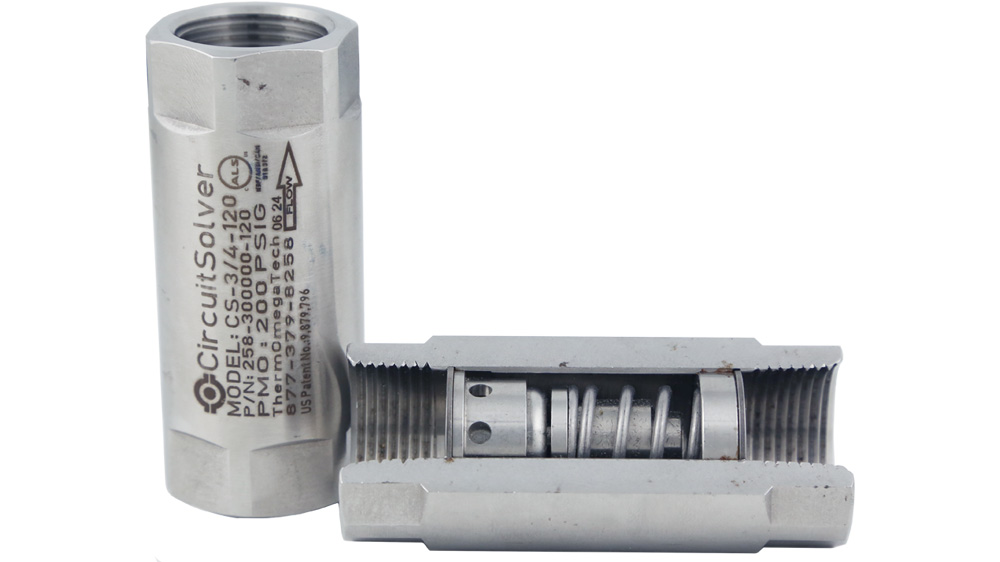
CircuitSolver® uses a factory-set thermal actuator that modulates over a narrow temperature range near the desired return temperature. This provides a higher Cv as the system approaches set point, reducing pressure drop and allowing the required flow to offset branch heat loss.
Typical adjustable valves operate across a wider temperature range, which can result in lower Cv and higher pressure drop near the desired return temperature. CircuitSolver’s fixed set point also eliminates field adjustment and tampering.
View Fixed vs. Adjustable Balancing Valve ComparisonBenefits of Thermostatic Balancing
Automatic Balancing
Responds to changing demand
No Manual Adjustment
Reduces balancing labor
Reduced Water Waste
Shorter hot water wait times
Lower Recirculation Flow
Supports proper pump sizing
Controlled Velocity
Helps protect against pipe erosion
Self-Actuating
No external power or controls
Commercial Building Applications
Thermostatic domestic hot water balancing is used in commercial and institutional buildings with multiple hot water branches or risers and varying demand, including:
- Hotels and hospitality properties
- Multifamily and high-rise buildings
- Hospitals and healthcare facilities
- Universities and student housing
- Commercial and mixed-use buildings
CircuitSolver® can be used in new construction or retrofit applications to replace manual or fixed-flow balancing valves with temperature-based balancing.


Proven CircuitSolver® Performance
CircuitSolver® has been used in commercial domestic hot water systems to reduce hot water wait times, shorten system balancing time, and maintain thermal balance across complex multi-branch and multi-riser installations.
8 Seconds
Hot water reached a sink more than 1,000 feet from the central utility plant in approximately 8 seconds at the Southeast Michigan Psychiatric Hospital.
Under 3 Hours
University of South Florida Beacon Hall’s hot water system automatically balanced in under three hours during system startup, without manual balancing labor.
Zero Hot Water Complaints
The 18-story Industrialist Hotel in Pittsburgh, PA reported zero guest complaints about hot water availability after opening.
CircuitSolver® Configurations
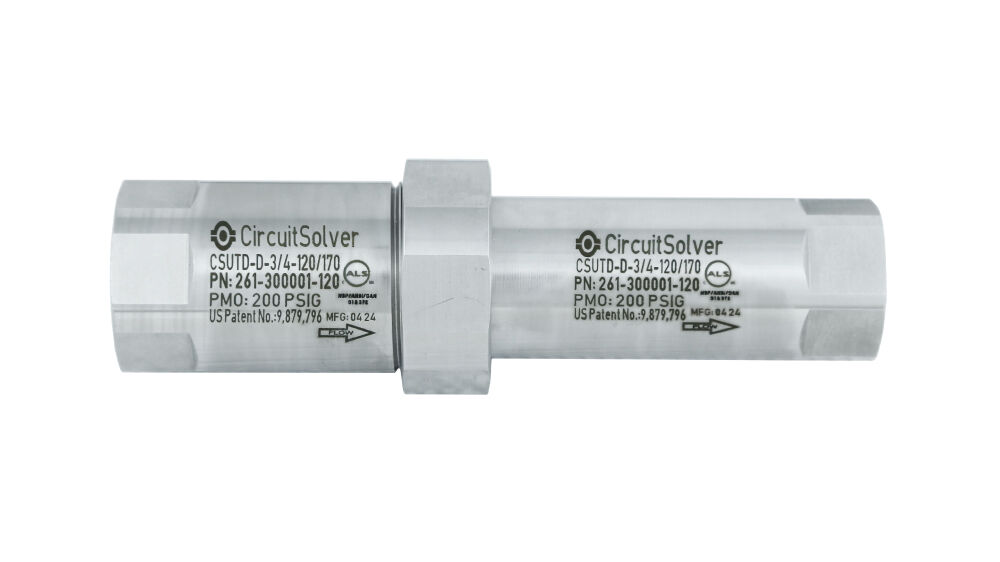
The CircuitSolver® thermostatic balancing valve is available in multiple configurations to support different piping layouts, connection requirements, and installation preferences. Options include standalone valves and assembled configurations with unions, check valves, ball valves, strainers, and thermometers, as well as ProPress® and ProPEX® connection options.
CircuitSolver® components meet applicable NSF/ANSI/CAN 61 and NSF/ANSI 372 requirements for potable water systems and are backed by an industry-leading 10-year warranty. Additional certifications, compliance information, and technical specifications are available on the CircuitSolver® product page.
Related Products
Ready to Automatically Balance Your Domestic Hot Water System?
Connect with your local ThermOmegaTech® representative for help selecting the appropriate CircuitSolver® configuration and set point for your domestic hot water recirculation system. For technical questions, application support, or other inquiries, contact the ThermOmegaTech® team directly.