Balancing for Dynamic Fluid Systems
In systems where a single hot or cold fluid source serves multiple branches, circuits, or equipment loads, the required operating temperature may be the same throughout the system. However, piping distance and system layout can vary from one branch or load to another, resulting in different levels of heat gain or loss as fluid travels through the system.
Without proper balancing, fluid follows the path of least resistance. Some branches or loads may receive more flow than needed, while others may not receive enough to offset heat gain or loss and maintain the required temperature.
Thermostatic balancing addresses these temperature differences by adjusting flow at each branch or load as thermal conditions change rather than relying on a fixed flow condition.
How Thermostatic Balancing Valves Work
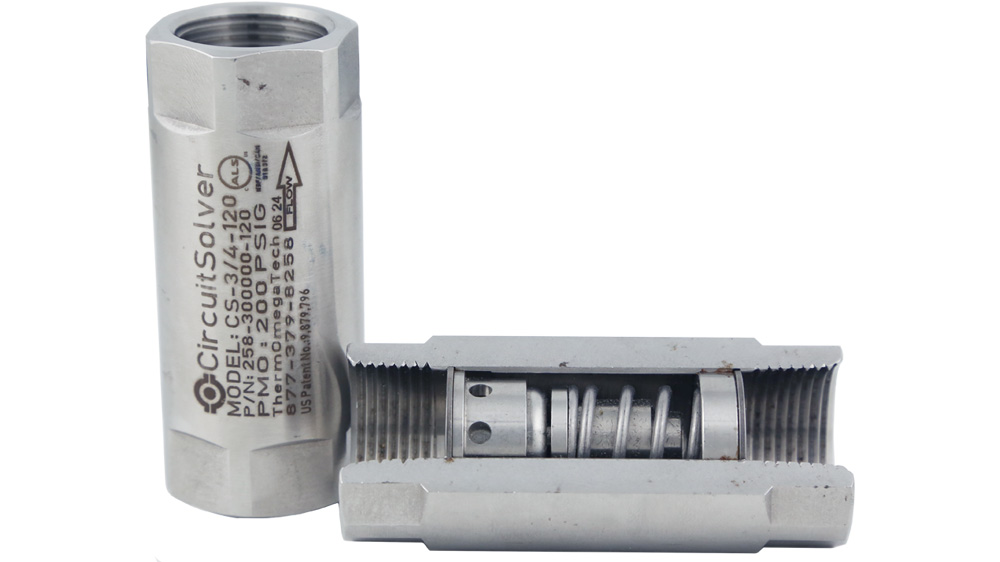
A thermostatic balancing valve uses a thermal actuator to continuously sense fluid temperature and control valve position. As the temperature rises above or below the specified temperature, the actuator causes the valve to modulate toward the open or closed position to regulate flow.
This automatic balancing valve operation allows each branch or load to respond independently to local temperature conditions.
Because the thermal actuator operates mechanically, the valve functions without external power or controls.
Commercial Plumbing Applications
Automatic temperature-based flow control can be applied to both hot and cold domestic water recirculation systems. The operating objective and valve response differ for each application.
Domestic Hot Water Balancing
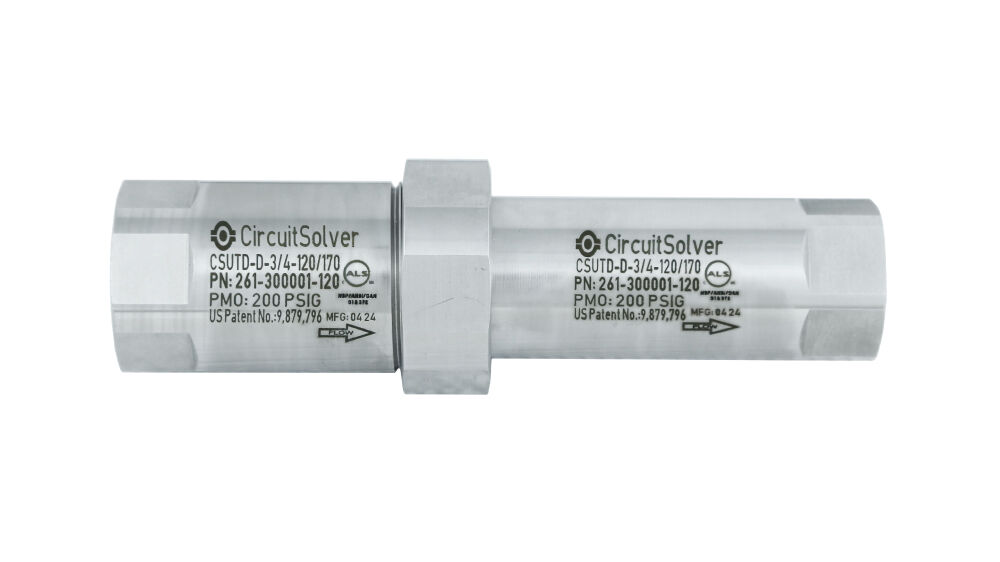
In domestic hot water recirculation systems, CircuitSolver® thermostatic balancing valves regulate return flow based on water temperature to help maintain hot water availability throughout the system.
Domestic Cold Water Balancing
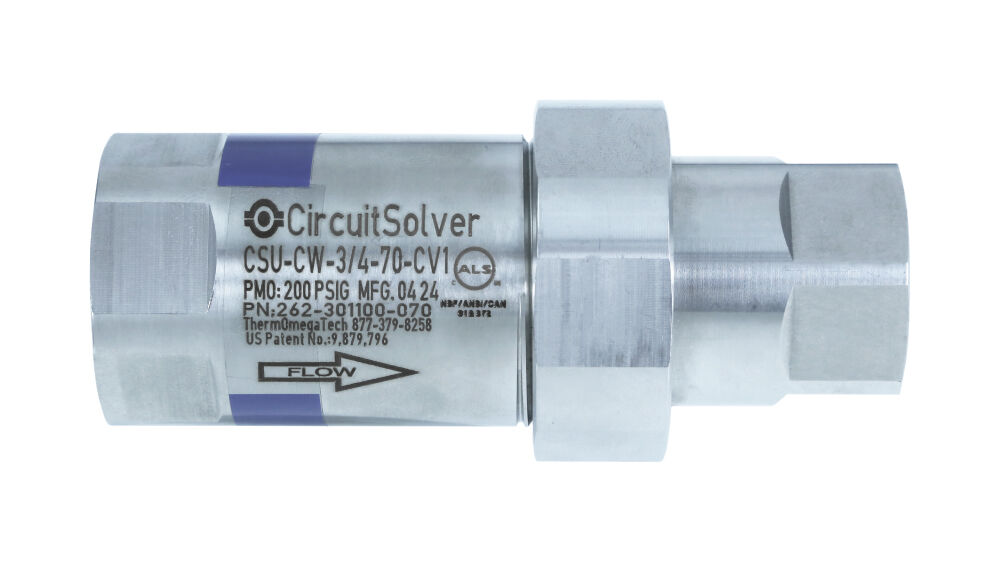
In domestic cold water recirculation systems, the CircuitSolver® Union Cold Water (CSU-CW) valve automatically regulates recirculation based on water temperature to help maintain cooler water throughout the distribution system.
Explore Domestic Cold Water BalancingUnlike manual balancing valves, which rely on fixed flow settings established during commissioning, CircuitSolver® adjusts as water temperature and system demand change.
Industrial Cooling Applications
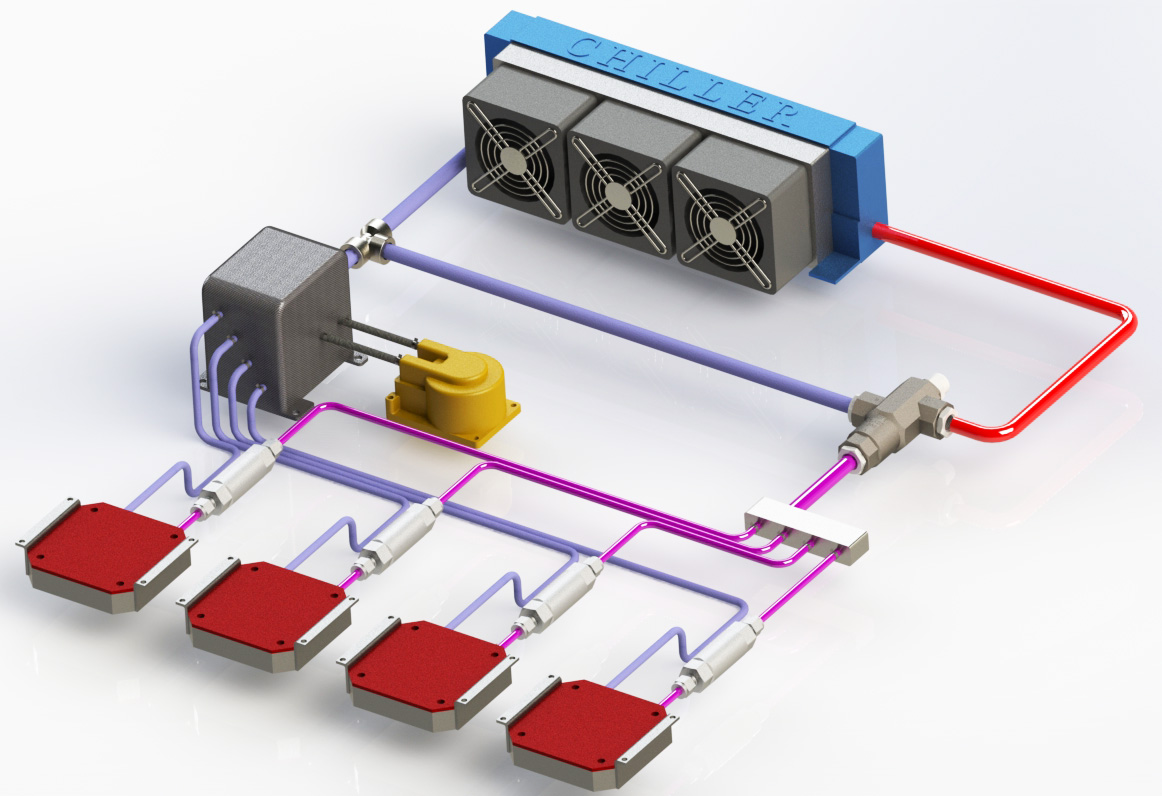
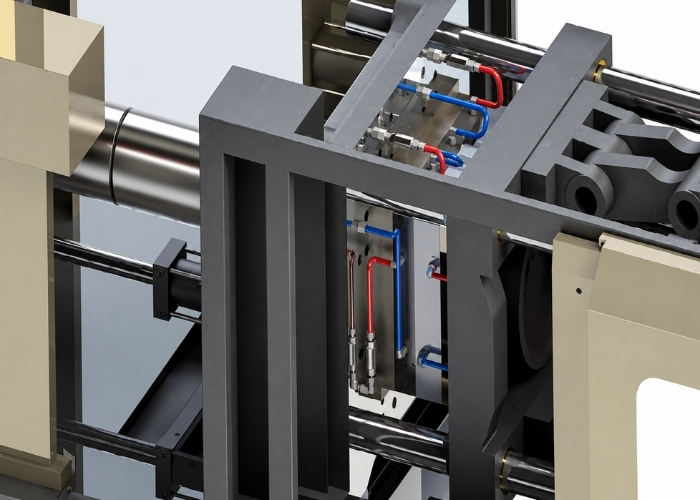
In molding, die-casting, platen cooling, and similar processes, maintaining consistent cooling temperatures helps provide uniform process conditions and consistent product quality.
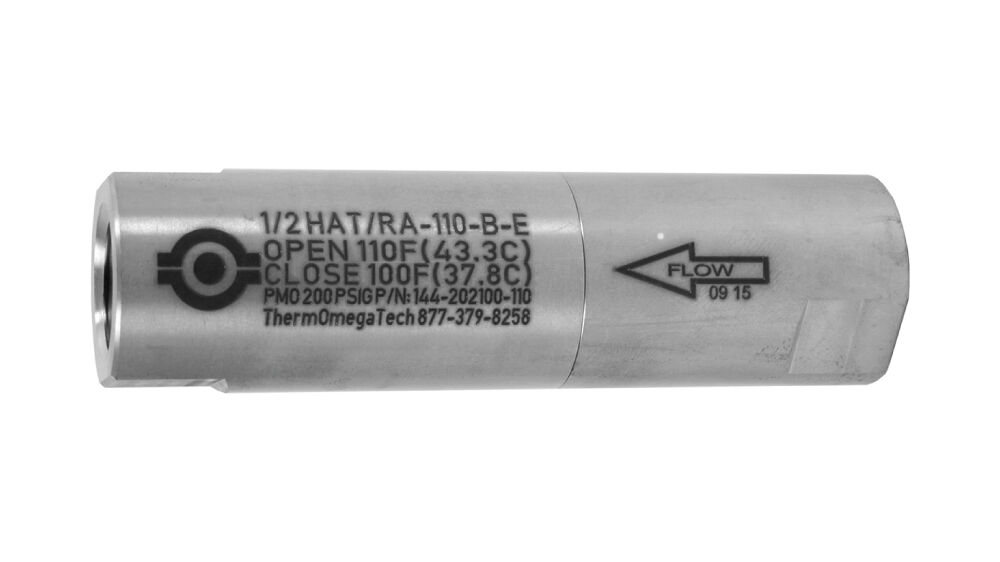
ThermOmegaTech® HAT/RA-LP and TV/HAT-RA-LP cooling fluid control valves regulate cooling water, glycol, or other cooling media based on fluid temperature. As temperature rises, the valve increases cooling flow. As temperature falls, it reduces flow.
Because each valve responds to the temperature at its individual load, cooling can adjust independently across multiple pieces of equipment or process zones.
Thermostatic cooling control can be used with:
- Injection, rubber, and plastic molding equipment
- Die-casting equipment and cooling platens
- Electronics and cold plates
- Battery thermal management systems
- Liquid-cooled data centers
- Secondary refrigeration systems
Reliable Temperature Control
Benefits of Thermostatic Balancing Valves
Controlled temperatures
Helps maintain required temperatures across branches, loads, or equipment.
Automatic response
Adjusts as system demand or heat load changes.
Reduced manual adjustment
Reduces repeated valve adjustment where fixed balancing is used.
Self-actuating operation
Requires no external power, sensors, or electronic controls.
Related Products
Find the Right Balancing Solution
For domestic hot or cold water balancing applications, connect with a ThermOmegaTech® Commercial Plumbing representative.
For industrial cooling and process applications, find an authorized Industrial distributor for product selection and availability.