Industrial Cooling Water & Fluid Control
Industrial equipment generates heat during operation that must be managed to maintain reliable operating temperatures. Prolonged exposure to excessive heat can increase component wear, reduce service life, and increase the risk of damage. Pumps, sampling systems, instrumentation, and other temperature-sensitive equipment may also require control to prevent overheating.
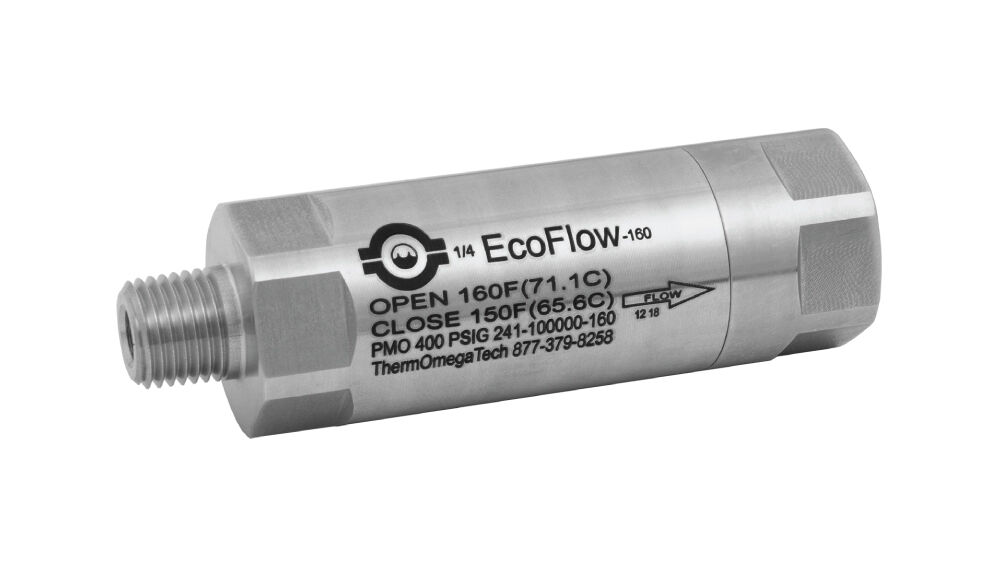
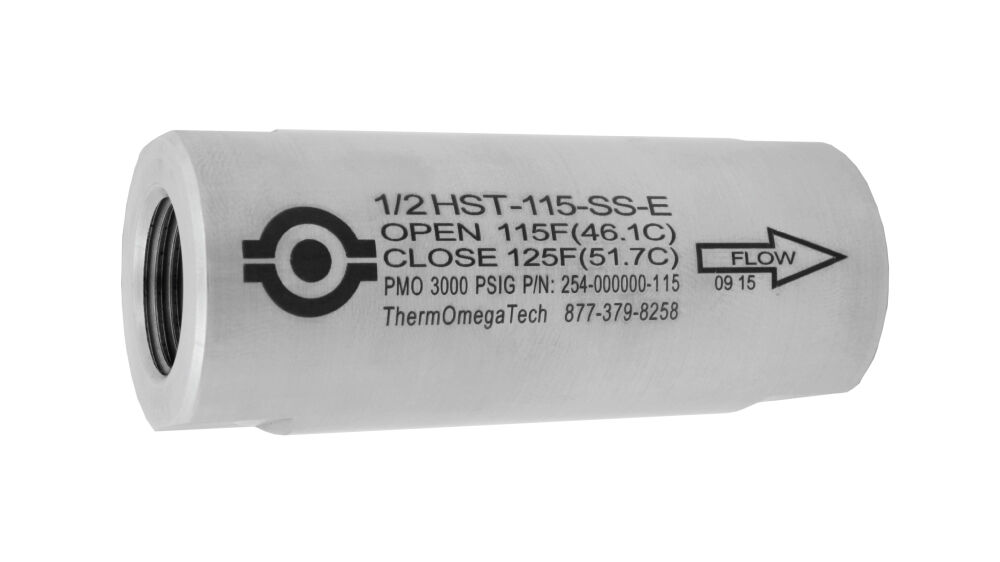
Depending on the application, excess heat can be managed by regulating the flow of cooling water or other cooling media, or by discharging overheated fluid from the system. ThermOmegaTech® thermostatic valves respond directly to temperature, automatically modulating or relieving flow as operating conditions change. This automatic control helps maintain required operating temperatures while reducing unnecessary cooling water consumption.
How Thermostatic Cooling Fluid Control Works
ThermOmegaTech® cooling fluid control valves use paraffin wax thermal actuators to automatically change valve position as fluid temperature changes.
The valve responds by increasing or reducing cooling media flow or shutting off fluid flow when the set point is reached. This thermostatic control requires no external power, sensors, or electronic controls.
Cooling Fluid Control Applications
Cooling Water Control
Regulates cooling water, glycol, or other cooling media to maintain the required operating or discharge temperature. As the fluid gets hotter, the valve opens to increase cooling flow; as it cools, the valve reduces flow to limit unnecessary cooling media consumption. Applications include compressors, engines, heat exchangers, welding systems, electrical systems, molding machines, and die-casting machinery.
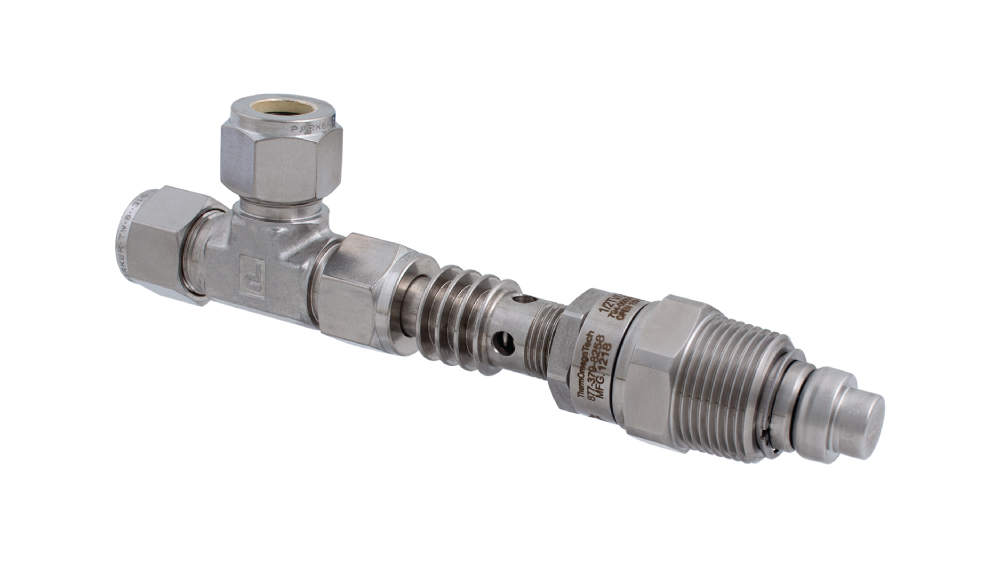
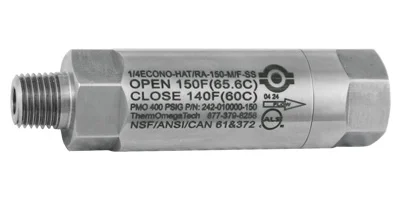
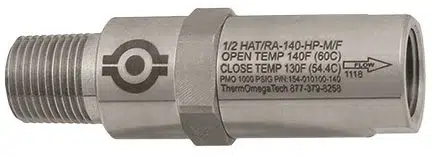
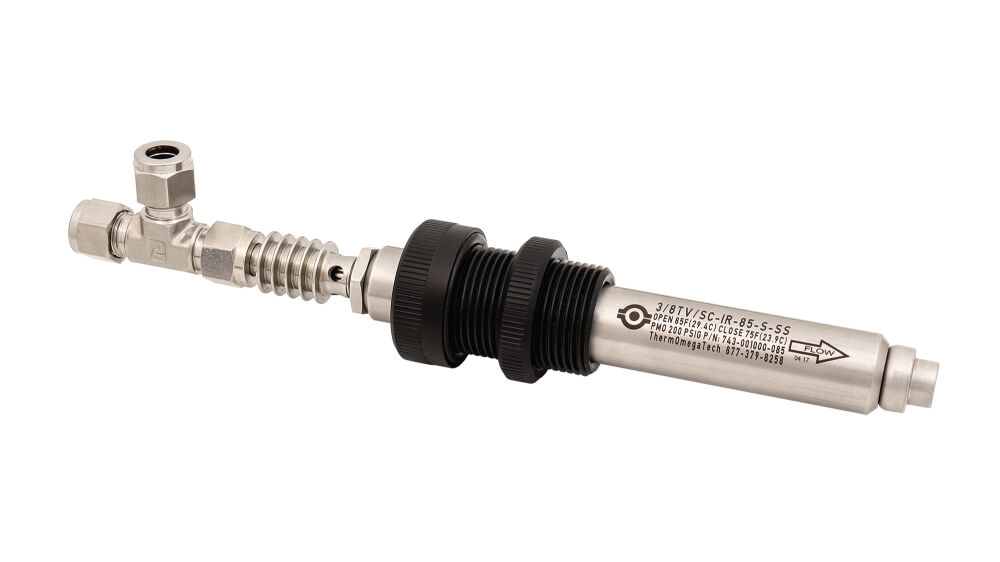
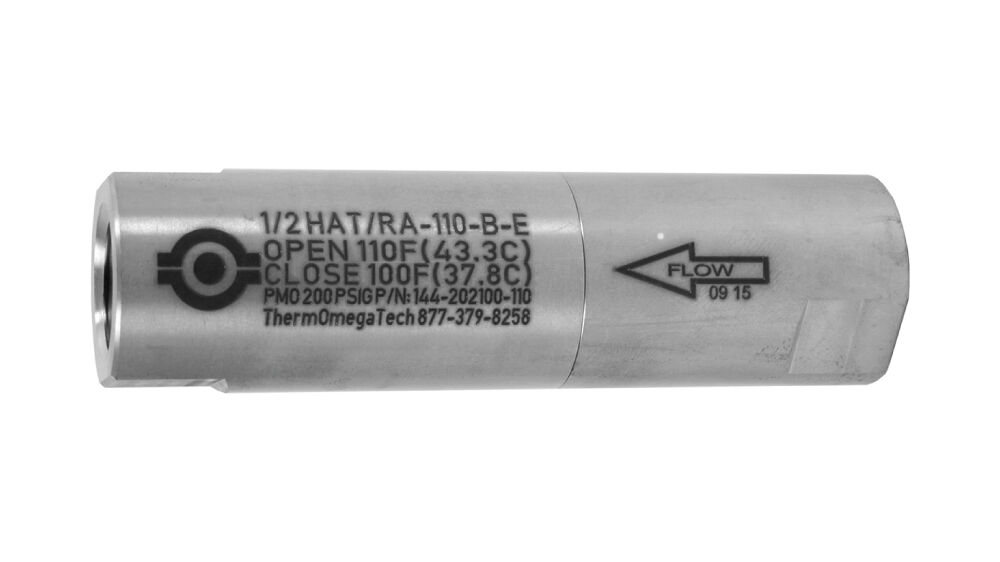
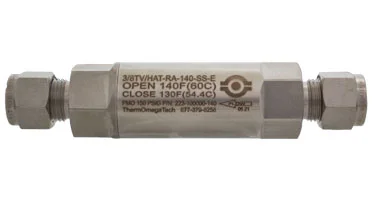
ThermOmegaTech® HAT/RA and TV/HAT-RA temperature control valves support cooling water applications with NPT or tube-fitting connections. HAT/RA-LP and TV/HAT-RA-LP configurations incorporate a leak port for increased sensitivity to upstream fluid temperature.
High Temperature Shutoff
Protects downstream instrumentation by automatically closing if the sample temperature leaving the cooler exceeds the valve set point, preventing high-temperature process fluid from reaching sensitive analyzer equipment.
Explore Instrument & Analyzer SystemsPump Thermal Relief
Discharges overheated water from booster pumps, fire pumps, and other water pumps as temperatures rise to protect pumps and other components from excessive heat.
Explore Pumps & Seals ApplicationsInstrument Enclosure Cooling Control
Maintains enclosure temperature by controlling the flow of cooling water, glycol, or other cooling media to prevent instrumentation and process samples from overheating.
Explore Instrument & Analyzer SystemsMechanical Seal Water Support
Controls seal flush water used for cooling, lubrication, and cleaning in pumps with mechanical seals. Thermostatic control supplies water as required while reducing unnecessary continuous flow.
Explore Pumps & Seals ApplicationsSample Cooler Temperature Control
Regulates cooling media flow into a sample cooler based on sample outlet temperature, helping maintain the required range for downstream analyzers and instrumentation.
Explore Instrument & Analyzer SystemsBenefits of Self-Actuating Cooling Fluid Control
- Automatic operation: Valve position changes in response to fluid or process conditions.
- Protects critical components: Helps prevent excessive heat from damaging pumps, seals, analyzers, and other temperature-sensitive components.
- Reduces cooling water consumption: Modulates cooling flow rather than maintaining unnecessary continuous flow.
- Eliminates external power: Self-actuating operation requires no sensors, wiring, or electronic controls.
Cooling Fluid Control Products
Choosing the Right Cooling Fluid Control Solution
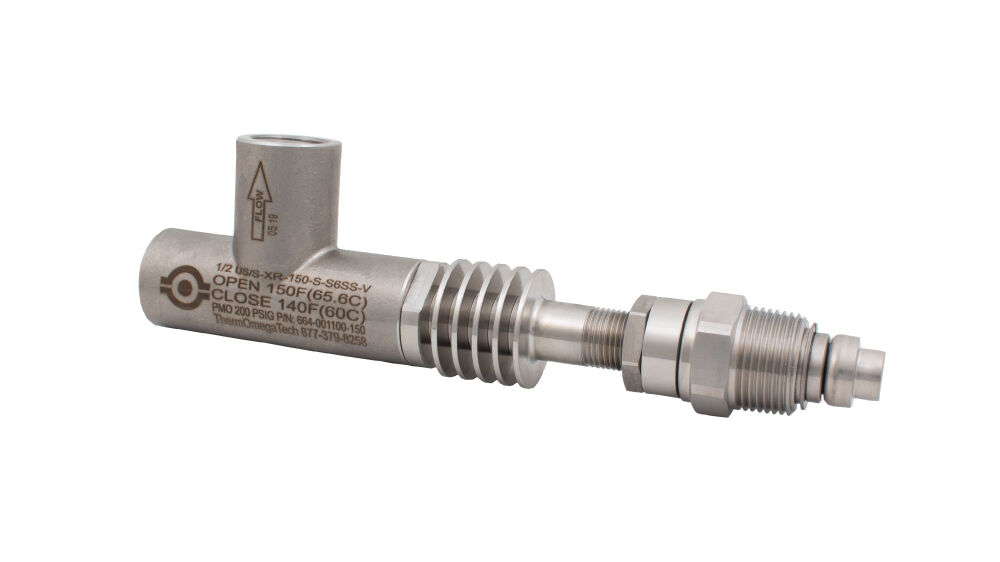
ThermOmegaTech® offers self-actuating thermostatic valves in a range of configurations to support cooling and thermal protection requirements across industrial systems.
Valve selection depends on cooling media, operating temperature, set point, flow requirements, system pressure, connection type, and installation configuration.
Need help selecting a valve? Our product experts can review your operating conditions and recommend the appropriate configuration.